
Garage Door Opener Lifespan: When to Repair or Replace
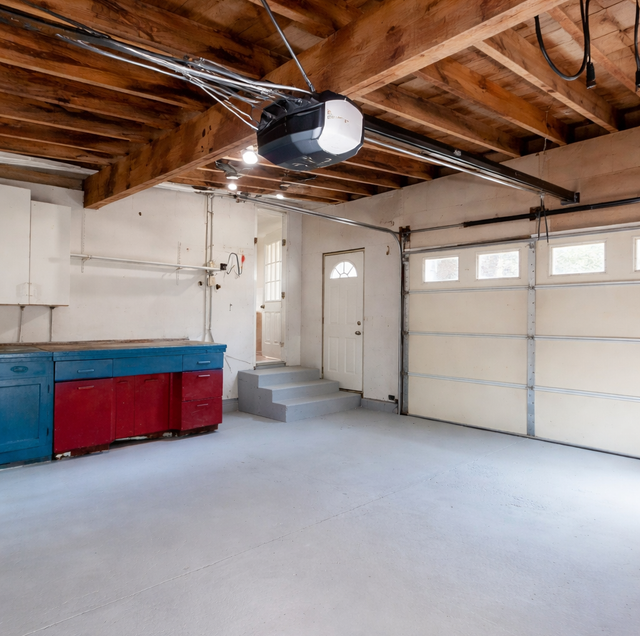
Quick Answer: A garage door opener usually lasts 10 to 15 years. Light use and regular maintenance push it toward the upper end; heavy daily cycling, a poorly balanced door, and skipped tune-ups pull it toward the lower end. Replace it when repairs stack up on an aging unit, when the safety auto-reverse fails, or when it predates the photo-eye sensors required since 1993.
Most homeowners never think about the opener bolted to the ceiling until the morning it refuses to lift the door. Until then, it is a quiet workhorse, and like any workhorse, it has a working life with a beginning, a long middle, and an end. Knowing where your unit sits on that curve tells you whether a strange noise means a fifteen-minute fix or the start of a replacement conversation.
The short version: a garage door opener typically lasts about 10 to 15 years. That range is wide on purpose, because how you use the opener and how well the whole door is maintained can push it toward either end. Below you will find what actually wears out inside the housing, how to read the warning signs, and where the line falls between a sensible repair and a smart replacement.
What Determines How Long An Opener Lasts
The 10-to-15-year figure describes an average household that opens and closes the door a handful of times a day. Several factors decide where a specific unit lands inside that window.
Cycles per day: Openers are rated in cycles, and one cycle is a single open plus a single close. A home with two working adults, a couple of teenagers, and a garage used as the main entrance can run 8 to 10 cycles a day, while a single-person household may run two. More cycles means more motor run-time and more wear on every moving part, so a heavily used opener simply ages faster in calendar years even though its mechanical life may be similar.
Drive type: The mechanism that moves the trolley along the rail comes in three common forms, and each ages differently. A chain drive uses a metal chain, is the most durable and the common budget-tier default, and tolerates heavy use well, though it runs louder and needs occasional lubrication. A belt drive uses a reinforced rubber belt, runs much quieter, and is easy on a shared wall with a bedroom above, but the belt itself is a wear item. A screw drive moves the trolley along a threaded steel rod, has few parts, and can be reliable, though it is sensitive to temperature swings and lubrication. Direct-drive and wall-mounted jackshaft units are newer variations with their own maintenance profiles.
Maintenance and door balance. An opener does not lift the door on muscle alone. In a properly balanced system, the springs do the heavy lifting, and the opener mostly guides the door and holds it in place. When the springs weaken, or the door falls out of balance, the opener is forced to drag dead weight it was never meant to carry, and that overwork shortens its life quickly. Clean tracks, lubricated rollers, and a balanced door take years of strain off the motor.
Exposure: Openers live in an unconditioned space, and temperature extremes matter in both directions. Cold can thicken lubricant and make plastic gears brittle, while sustained high temperatures stress the motor and can shorten the life of electronic components. Dust and grit blown into the garage settle on the rail and foul the photo-eye sensors, and a spike in the electrical supply can damage the logic board any time of year. None of these is seasonal alone; a unit faces one stress or another in every month.
What Actually Wears Out Inside The Opener
Before you ever notice a symptom, specific parts are quietly reaching the end of their service life. Knowing them helps you understand what a technician is looking at.
The motor: The electric motor drives everything. Over thousands of cycles, the windings age, brushes wear in motors that use them, and the bearings develop play. A motor that has been fighting an unbalanced door for years fails sooner than one that only ever guided a well-tuned system.
The drive gear and sprocket: On many chain and belt units, a plastic drive gear meshes with a metal worm gear on the motor shaft. Plastic is used on purpose so it fails before the harder-to-replace metal parts do, acting as a sacrificial component. A stripped drive gear is one of the most common single-part failures, and on a unit still in its prime it is a genuine repair rather than a reason to replace.
The logic board: The circuit board is the brain, reading the remotes, running the safety logic, and controlling the motor. Age, heat, humidity, and power surges all degrade it. Board failures often show up as erratic behavior: intermittent response, phantom operation, or lights that flicker without reason.
The capacitor: This component stores the burst of energy the motor needs to start moving. A weak capacitor leaves the motor humming without turning, or starting slowly, and it is a frequent culprit behind an opener that suddenly struggles to begin a lift.
The belt or chain: The drive belt stretches and eventually frays, while a chain stretches and can begin to slap the rail. Both are wear items with a finite life, and a loose or worn drive is a common source of new noise and jerky movement.
The Signs It Is Time To Repair Or Replace
A single symptom rarely tells the whole story. Read them against the age of the unit, because the same noise on a three-year-old opener and a fourteen-year-old opener points to two different decisions.
Intermittent operation: If the door responds only sometimes, or works from one remote but not another, the cause could be a dying logic board, worn contacts, or a signal problem. On a newer unit, this is often a fixable fault; on an old one, it is frequently the first sign the electronics are giving out.
Grinding, straining, or a labored lift: Grinding usually points to a stripped or worn drive gear, while a motor that strains and moves the door slowly may be short on power from a failing capacitor. A straining opener can also be masking a spring or balance problem, so the door itself should be checked, not just the opener. If the springs are weak, no new opener will fix the underlying drag.
Slow or unusually noisy operation: Openers get a little louder with age, but a sudden jump in noise, rattling, banging, or scraping signals a loose chain, failing bearings, or a part working its way loose. Noise that appears overnight is worth a look before it becomes a breakdown.
Won't respond at all: No response to remote or wall button can be as simple as a dead remote battery, a tripped outlet, or an engaged vacation lock, or as serious as a burned-out motor or dead board. Rule out the simple causes first, then have the unit checked.
Safety auto-reverse failure: Every opener made after the early 1990s must reverse the door if it meets an obstruction. If the door does not bounce back when it contacts something, or does not reverse when the photo-eye beam is broken, the safety system has failed, and the opener is a crushing hazard until it is repaired or replaced. Test this monthly.
Frequent repairs on an aging unit: One repair on a ten-year-old opener is normal. A second and third within a year or two is the unit telling you it is near the end, and continuing to patch a worn-out opener usually means chasing one failure after another instead of replacing it.
Why A Pre-1993 Opener Should Be Replaced
Photo-eye safety sensors became a federal requirement for residential openers manufactured after January 1, 1993. These are the two small sensors mounted a few inches off the floor on either side of the door; when the invisible beam between them is broken, the door stops and reverses. An opener old enough to predate that requirement has no such sensor beam and relies only on a mechanical force setting, which is far less reliable at protecting a child, a pet, or anything else caught underneath.
If your opener is that old, replacement is the right call for safety alone, setting aside the fact that a unit of that age is well past its expected service life. A modern opener brings the photo-eye system, a properly calibrated auto-reverse, and decades of engineering improvements that the older design simply does not have.
Newer Features Worth Upgrading For
When replacement is on the table, a current opener offers real gains beyond just running again.
Battery backup: Many newer units include a backup battery so the door still opens during a power outage, without hunting for the manual release cord in the dark. In some jurisdictions, battery backup is now required on new residential installations.
Wi-Fi and smart control: Built-in connectivity lets you open, close, and check the door status from a phone, and get an alert if the door is left open. It is the difference between wondering whether you shut the door and simply looking.
A quieter belt drive: If your current unit is a rattling chain drive under a bedroom, a belt-drive replacement is dramatically quieter and a common reason homeowners upgrade even before failure.
Rolling-code security: Modern openers change the access code every time the remote is used, which closes the door on older fixed-code units that a determined intruder could capture and replay. Rolling code is a meaningful security improvement over anything more than a couple of decades old.
The Opener Is Not The Door
One point saves a lot of misdiagnosis: the opener is a separate system from the door, its springs, and its cables. The opener is the motor unit that automates movement. The springs counterbalance the door's weight and do the actual lifting, and the cables and tracks guide it.
The opener is a separate system from the door, its springs, and its cables, so swapping the opener will not fix a broken spring or a frayed cable. To tell a door problem from an opener problem, pull the release cord to disconnect the opener and lift the door by hand: a balanced door moves smoothly and stays put around waist height.
Frequently Asked Questions
Residential openers are commonly rated somewhere in the range of 10,000 to 20,000 cycles over their life, with heavier-duty and commercial-grade units rated higher. Because one cycle is a full open-and-close, a household running eight cycles a day burns through roughly 2,900 cycles a year, which is one reason usage matters so much more than calendar age when estimating remaining life.
Yes. A stripped plastic drive gear is a designed-in sacrificial part, and gear kits are made specifically to rebuild the drive without touching the motor or board. On an opener under roughly eight to ten years old with no other issues, replacing the gear is a sound repair. On a much older unit, a gear failure is often the moment to weigh replacement instead.
Two quick tests, done monthly. For the contact-reversal test, place a solid object such as a length of two-by-four flat on the floor in the door's path and close the door; it should touch the wood and immediately reverse. For the photo-eye test, start the door closing and wave a broom handle through the beam near the floor; the door should stop and reverse. If either test fails, stop using the automatic operation and have the opener serviced.
The opener itself is not running while the door sits open, so open time does not wear the motor. What ages electronics is heat soaking into a closed, unventilated garage over long periods, along with dust settling on the rail and sensors. Keeping the garage reasonably ventilated and the sensors wiped clean does more for opener life than worrying about how long the door stays up.
Usually not directly. Remotes and keypads are matched to the opener's receiver and its security coding, so a new opener generally comes with new remotes, and older accessories rarely pair with a modern rolling-code unit. Some brands offer compatible add-on remotes, but plan on programming fresh accessories to the new unit rather than reusing the old ones.
A once-a-year tune-up is the common recommendation for a door in regular use, and more often for a door cycled many times a day. A service visit checks spring tension and door balance, lubricates the rollers and hinges, tightens hardware, tests the safety reverse, and inspects the opener's drive, all of which directly extends how long the opener lasts by keeping it from fighting a poorly balanced door.
Book a garage door tune-up — catch a worn opener before it strands you in the driveway. Phoenician Garage Door serves Phoenix, Scottsdale, and Mesa. ROC #316471. Call (602) 610-0112.
