
Garage Door Maintenance: What to Check and How Often
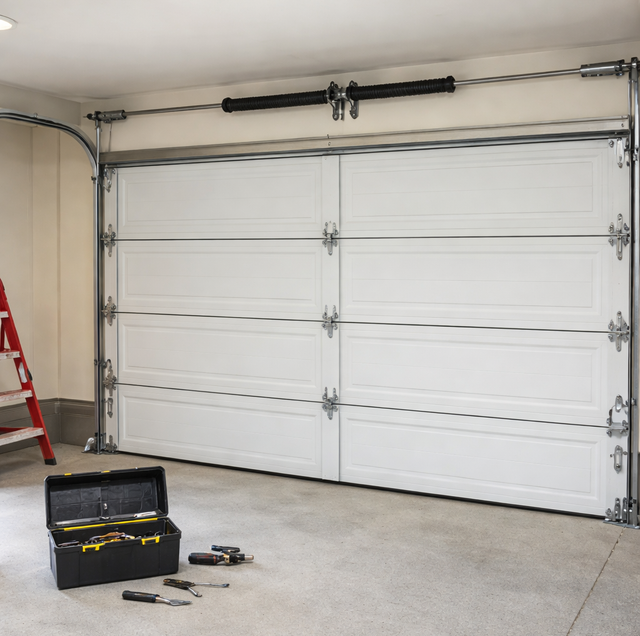
Quick Answer: Give a garage door a quick visual and listening check every month, a hardware-tightening and lubrication pass every three to six months, and a full inspection once a year. Test the auto-reverse safety features monthly. Leave springs, cables, and any high-tension adjustment to a trained technician.
A residential garage door weighs between 130 and 350 pounds, and a double-wide steel door can push past 400. It is the single heaviest moving object most homes contain, and it travels that weight up and down a thousand or more times a year on a system of springs, cables, rollers, and hinges no thicker than your finger. When one part quietly wears out, the door does not usually fail gently. It fails at the worst moment: with a car parked underneath it, with a child walking through the opening, or on the one morning you are already late.
Why Maintenance Comes Before The Checklist
The reason a garage door earns this much attention is stored energy. The springs that counterbalance the door are wound or stretched to hold hundreds of pounds in tension so the opener, or your arm, only has to move a few pounds of net weight. That balance is the whole reason the system works. When it drifts out of adjustment, the opener strains, the rollers grind, and small parts start absorbing forces they were never sized for.
Most catastrophic failures announce themselves weeks ahead as a squeak, a shudder, a cable that looks slightly frayed, or a door that no longer holds still when you stop it halfway. Maintenance is mostly about catching those signals early, while the fix is a wrench and a can of lubricant instead of a technician and a tow-truck-adjacent morning. A neglected door is like a bicycle chain run bone-dry: it still turns for a while, then one link seizes and takes the rest with it.
There is also a safety dimension that has nothing to do with convenience. The photo-eyes and auto-reverse built into every opener made after 1993 are the only thing standing between a descending door and whatever is under it. Those features age, drift, and fail silently. Testing them is not optional upkeep; it is the difference between a door that stops for an obstruction and one that does not.
The Monthly Quick Check
Once a month, spend two minutes watching and listening while the door cycles.
Look and listen: Stand inside and run the door through a full open and close. Watch whether both sides rise evenly or one side lags and racks. Listen for new sounds: grinding suggests a dry or failing roller, a rhythmic pop can mean a hinge or bracket working loose, and a loud bang at rest is a warning sign of a spring or cable problem that needs a pro, not a homeowner.
Scan the moving parts: With the door closed, look at the cables running from the bottom brackets up alongside the tracks. They should be tight and unfrayed, with no broken strands standing up like a wire brush. Check that rollers sit in the track and are not tilting or shedding pieces. Note anything that looks off and schedule a closer look during your next full inspection.
The Quarterly Hardware And Lubrication Pass
Every three to six months, the door benefits from a hands-on session. Disconnect the opener first by pulling the manual release cord so the motor cannot drive the door while you work.
Tighten the hardware: Vibration is relentless. Every cycle sends a small shudder through the door, and over hundreds of cycles that shudder backs off bolts and loosens brackets. Run a socket and wrench over the roller brackets, hinge bolts, and the bolts holding the track brackets to the wall and ceiling. Snug them; do not gorilla down on them, since overtightening can strip the hole or crack a hinge. Leave the bottom-bracket bolts alone. Those are under cable tension and are a pro-only zone.
Lubricate the right parts with the right product: Use a garage-door-specific lubricant, or a lithium-based or silicone-based spray. Do not use WD-40 as a lubricant. WD-40 is a water-displacing solvent that cleans and thins, and it actually strips away the grease you want to keep. It is fine for freeing a rusted bolt, but as a lubricant it evaporates and leaves parts dry.
Apply lubricant to the hinge pivot points, the roller stems and bearings (not nylon roller wheels themselves), the spring coils, and the bearing plates the spring shaft rides in. Wipe the excess so it does not drip or collect dust. The tracks are the exception: keep them clean and dry, and never grease them. Grease on a track traps grit and turns into a paste that fights the rollers instead of helping them.
The Monthly Balance Test
This is the single most telling check you can do, and it takes a minute. Do it only on a door that is on its tracks with an intact spring; if the door is already off-track or a spring is broken, stop and call a technician.
With the opener disconnected via the release cord, lift the door by hand to about waist height or halfway height and let go. A properly balanced door will hold roughly still, drifting only slightly. If it drops or slams down, the springs have weakened, and the door is heavier than the counterbalance can hold. If it shoots upward, the springs are over-tensioned. Either way, the opener is now doing work it was never meant to do, which shortens its life fast. Spring adjustment is high-tension work and belongs to a professional, so log the result and book the fix rather than reaching for the winding bars yourself.
Testing The Auto-Reverse Safety Features
Every modern opener has two independent safety systems, and both need a monthly test because either can fail on its own.
The photo-eyes: Two small sensors sit near the bottom of the tracks, about six inches off the floor, one shooting an invisible beam to the other. With the door open, start it closing and wave a broom handle or your foot through the beam. The door should stop and reverse immediately. If it keeps closing, the eyes are misaligned, dirty, or wired wrong, and the safety is not working.
Lay a flat board or a stood-up roll of paper towels where the door meets the ground and close it. If the door does not reverse within about two seconds of contact, the down-force is set too high, and the door has become a crushing hazard. A door that will not reverse is the most dangerous condition on this list and needs immediate attention.
Clean and align the eyes: While you are down there, wipe each lens with a soft dry cloth. Dust films and cobwebs are the most common reason a beam breaks. Check that both sensors point straight at each other; most have an indicator light that glows steady when aligned and blinks or dims when knocked askew. A gentle nudge back into line often restores a door that had started reversing for no reason.
The Annual Deep Inspection
Once a year, go over the whole system slowly.
Rollers, hinges, and cables: Look at each roller for chipped or cracked nylon, flat spots, or a wobbling stem, all signs the bearing is shot. Steel rollers with worn bearings often show a dark smear on the track. Check every hinge for elongated bolt holes or hairline cracks near the pivot, which appear where the door has been racking. Re-examine the cables end to end for rust, kinking, or a strand starting to unwind. A cable at the fraying stage is living on borrowed time.
Weatherstripping and the bottom seal: Inspect the rubber bottom gasket for splits, flattening, or gaps where light shows through when the door is closed. Check the seals along the sides and top for cracking and pieces pulling away from the frame. These parts take a beating from sun and grit year-round, brittle and shrinking in one season, swollen and sticky in another, so read them for cumulative wear rather than one weather event. A worn bottom seal is a homeowner-friendly swap; most slide out of a channel and a new one slides in.
Tracks and fasteners: Wipe the inside faces of the tracks clean with a rag, removing packed grit and old grease. Confirm the tracks are plumb and the vertical sections are the same distance from the wall top and bottom. Give every lag bolt and bracket a final snug.
What To Leave To A Pro
Some parts of a garage door store enough energy to break bones, and no amount of caution makes them a homeowner job.
Torsion and extension springs are the clearest line. A torsion spring holds several hundred pounds of wound tension, and a slipped winding bar can strike with the force of a small hammer swung by a machine. The lift cables are under that same load and can whip if released. Anything involving adjusting, unwinding, or replacing a spring or cable; a door that has jumped its track; a bottom bracket; or an opener drive that needs internal work belongs to a trained technician with the right bars, clamps, and replacement parts. A pro also brings the calibrated feel to reset spring tension and force settings correctly, which is what actually protects the opener and the people using the door.
Frequently Asked Questions
Springs are rated in cycles, not years, and a standard torsion spring is typically built for about 10,000 cycles. One cycle is one open plus one close. A household that runs the door four times a day burns roughly 1,460 cycles a year, which works out to about seven years. A busy household using it eight or more times a day can reach the end in three to four. High-cycle springs rated for 20,000 or more cycles exist and are worth requesting if your door is your main entrance.
Yes, and it is a moment worth planning for. On a two-spring door, both springs are usually installed at the same time and share the same load, so when one breaks, the other is close behind. Most technicians replace both together, because installing a single new spring next to an old, weakened one leaves the pair mismatched and the new spring carrying more than its share. Replacing the pair keeps the two matched and avoids a second service call within months when the older spring soon follows.
The usual culprit is the photo-eyes, not the door itself. If sunlight is hitting one sensor directly at certain hours, it can wash out the beam and read as a blocked path, which is why some doors only misbehave at particular times of day. Dust on a lens, a spider web across the beam, or a sensor knocked slightly out of line do the same thing. Clean both lenses and confirm the alignment light is steady before assuming the opener is faulty.
No. A jack can slip or kick out under an off-balance door, and it does nothing to control the spring tension that is the real hazard. If you need the door held open for a check, engage the opener's travel or use locking pliers clamped onto the track just below a roller as a physical stop, then keep your hands out of the section joints. For anything involving the springs, the door should be handled by a technician who can secure it properly.
Check the drive tension about once a year. A chain that sags more than roughly half an inch below the rail can slap and jump a sprocket tooth, causing jerky travel; most openers have an adjustment nut on the trolley to take up the slack. Belt-drive units stretch far less but should still be eyed for a belt that has gone slack or glazed. Do not overtighten, since a drive pulled bowstring-tight wears the sprocket and motor bearings prematurely.
A hot or burning odor from the opener usually points to a motor working too hard, and the most common root cause is an out-of-balance door forcing the motor to lift weight the springs should be carrying. It can also be a failing capacitor or a stripped drive gear. Stop using the opener, run the manual balance test, and if the door is heavy by hand, address the springs with a pro before the motor overheats and burns out.
Book a tune-up before a small squeak becomes a stranded car — a trained tech checks springs, cables, and safety reversal in one visit. Phoenician Garage Door serves Phoenix, Scottsdale, and Mesa. ROC #316471. Call (602) 610-0112.
