
Torsion vs. Extension Springs: Which Is Right for Your Door?
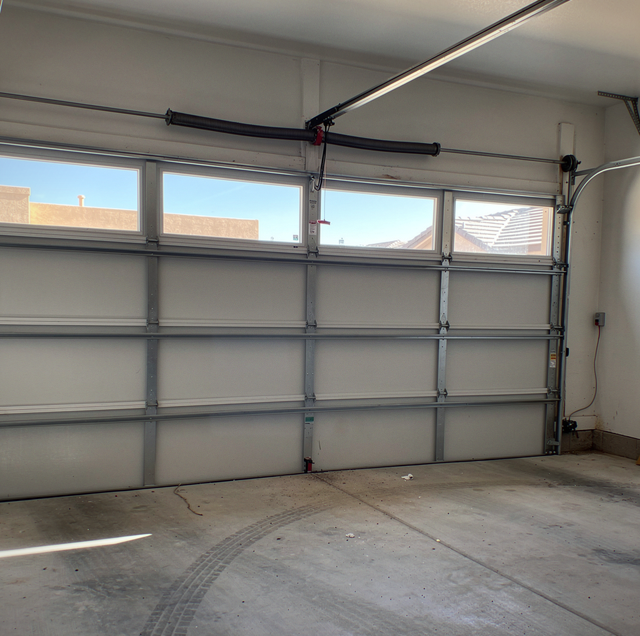
Every sectional garage door depends on a spring system to counterbalance its weight. Without that counterbalance, an opener motor built to lift a door carrying only a few pounds of spring tension would instead be fighting the full weight of the door, and the door itself would be almost impossible to lift by hand. The two spring systems used to do this job, torsion and extension, work on different mechanical principles, wear differently, and carry different safety considerations. If you are trying to understand which type your door has, why it matters, or what to expect when a spring finally reaches the end of its service life, here is how the two compare.
How Torsion Springs Work
Torsion springs mount horizontally on a metal shaft directly above the closed door, usually centered over the opening. As the door closes, the springs wind tighter, storing energy. As the door opens, that stored energy unwinds through the shaft and a set of cable drums, which pull the lifting cables and help raise the door in a controlled, even motion. Most modern two-car doors use two torsion springs working together on the same shaft, and many single-car doors use one.
Because the tension in a torsion spring is held along a fixed shaft rather than stretched across an open span, the system tends to distribute the door's weight more evenly across both sides as it travels. That even distribution is part of why torsion springs became the standard choice for heavier doors, including insulated steel doors and wider two-car openings.
How Extension Springs Work
Extension springs mount differently. Instead of a shaft above the opening, you'll typically see a pair of springs running along the horizontal tracks on either side of the door, one on each track. As the door closes, these springs stretch and store energy; as they open, they contract, and a pulley-and-cable system converts that motion into lift.
Extension springs are common on older installations and on lighter doors, including many single-layer or non-insulated doors where less lifting force is needed. Because each side operates somewhat independently along its own track, small differences in tension between the left and right spring can show up as a door that feels slightly uneven as it travels, something that's less common with a shaft-mounted torsion system.
Torsion vs Extension Springs at a Glance
| Factor | Torsion Springs | Extension Springs |
|---|---|---|
| Mechanism | Mounted on a shaft above the door; wind and unwind to turn cable drums | Mounted along the side tracks; stretch and contract to pull cables through pulleys |
| Safety profile | Tension is contained along a fixed shaft; still requires professional handling | Under tension along an open track; safety cables are needed to contain a spring if it breaks |
| Typical door types/weights | Common on two-car, insulated, and heavier steel doors | More common on lighter, single-car, or older non-insulated doors |
| Maintenance | Periodic inspection of shaft, cable drums, and winding cones | Periodic inspection of both springs, pulleys, and required safety cables |
| Noise | Generally quieter and smoother through the full range of travel | Can be noisier, particularly the pulley and cable action near full open |
| Lifespan pattern (general) | Wear tracks with cycle count and tension load; heat and dust exposure add stress over time | Wear tracks with cycle count and tension load; heat, dust, and pulley friction add stress over time |
Note that neither system is universally "better." Which one usually comes down to when the door was installed, its weight, and the original manufacturer's design.
Why the Spring Type Affects Safety
Both spring types store enough force to cause serious injury if they fail or are handled incorrectly, and both should be treated as high-tension equipment at all times, not just during a repair. The mechanical difference between the two systems does change how that stored energy behaves if something goes wrong. A torsion spring's tension is held along a fixed shaft, which is part of why professional technicians use specific tools and containment methods when winding or unwinding it. An extension spring stretches across an open section of track with no shaft to contain it, which is why properly installed safety cables are used to keep the spring from becoming a projectile if it snaps.
This is not a project for adjustment, repair, or replacement without training. If you suspect a spring problem, the safest course is to leave the door alone and call a professional for an inspection rather than attempting to diagnose or touch the spring yourself.
Which Door Types Typically Use Each Spring
If you want a rough sense of which system is on your door without opening it up, weight and age are good starting clues. Heavier doors, including insulated steel doors and most modern two-car doors, are more likely to use torsion springs because that system handles higher, more consistent loads well. Lighter doors, older installations, and some single-car doors are more likely to use extension springs, since that system was historically simpler to install in lighter applications.
Visually, the difference is easy to spot. A torsion system has a single shaft with one or two coiled springs running horizontally above the closed door, centered over the opening. An extension system has a spring running along the top of each side track, roughly parallel to the horizontal section of track, often with a thinner safety cable threaded through the coil. If you're not sure which one your door has, a quick look above and along the tracks with the door closed will usually answer the question without needing to touch anything.
Signs Your Springs Are Wearing Out
Spring wear tends to show up as changes in how the door moves rather than as a single obvious event. A door that feels heavier than it used to, a door that closes unevenly with one side dropping faster than the other, visible gaps or separation in the coils, or a loud bang from the garage are all signs worth having checked. An opener straining to lift a door, or reversing partway through its cycle, can also point to a spring that's no longer providing full counterbalance rather than a problem with the opener itself.
Extreme heat plays a real role in how fast this wear shows up. High heat accelerates the breakdown of spring lubricant, and dust or grit that works into the coils in a hot, dry climate adds friction and corrosion that speed up wear in both torsion and extension systems. Doors that see high cycle counts year-round, opening and closing multiple times a day in a hot climate, tend to reach the end of a spring's useful life sooner than doors that see lighter, cooler-climate use. None of this means every hot day damages a spring, but it does mean spring wear tends to accelerate more in hot-summer climates than in milder ones.
Maintenance and Inspection Differences
Both spring systems benefit from periodic visual inspection, and the specifics differ slightly by type. On a torsion system, a technician checks the winding cones, the cable drums, and the shaft itself for wear or misalignment. On an extension system, inspection includes both springs, the pulleys they run through, and, importantly, the safety cables that contain the spring if it breaks. Because extension springs rely on the separate cable for containment, verifying that the cables are present and in good condition is part of a proper inspection of that system.
Neither type should be lubricated, adjusted, or tensioned by anyone other than a trained technician. Routine tune-up and maintenance visits are the right way to keep tabs on spring condition over time, since a technician can spot early signs of wear, such as gaps in the coils or rust developing in dusty conditions, before they lead to a sudden failure.
Noise and Everyday Performance
Day-to-day, one of the more noticeable differences between the two systems is sound. Torsion springs, because they operate on a fixed shaft with cable drums, tend to run more quietly through a full open-and-close cycle. Extension springs, because they rely on pulleys and cables that stretch along the track, can produce more noise, particularly a rattling or clicking sound as the pulleys turn near the top of the track.
Dust is also worth mentioning here, even though it affects the door's other hardware more directly than the springs themselves. Dust storms can work grit into tracks, rollers, and photo-eye sensors, and a door that sounds rougher than it should may have grit in the rollers or track rather than a spring problem at all. A technician can usually distinguish spring noise from track or roller noise during an inspection.
Why Spring Replacement Is Not a DIY Project
It's worth repeating plainly, because it's the single most important point in this comparison: garage door springs, torsion or extension, are under enough stored tension to cause severe injury or worse if mishandled. This applies to adjusting tension, replacing a worn spring, or even removing a broken one. Professional service means winding bars and clamps to control the release of a torsion spring, proper restraint for an extension spring under tension, and a trained technician who knows how to release, adjust, or replace either type safely, because the margin for error with a high-tension spring is small.
If a spring looks worn, sounds different, or has already broken, the safest move is to avoid operating the door manually or with the opener, and to schedule a professional evaluation. This is true regardless of which spring type your door uses. A trained technician can identify the type, evaluate the rest of the counterbalance system including cables, drums, and pulleys, and recommend the correct fix without putting you at risk.
Frequently Asked Questions
No. A door is built around one system or the other, either a shaft-mounted torsion setup or a pair of track-mounted extension springs, not a mix of both. If a door has ever been converted from one system to the other during a prior repair, that's a deliberate replacement job done by a technician, not something the two systems share by default.
In a two-spring torsion setup, the springs are typically installed as a matched pair and experience similar wear over the same cycle count. Many technicians recommend replacing both springs together, even if only one has failed, since the second spring is usually close behind in wear, and replacing one at a time can leave the door unevenly balanced.
Yes, in a subtle way tied to how each system is installed. A torsion system ties both sides of the door together through a single shaft, so once a technician sets the winding tension correctly, both sides lift in sync, and the opener sees a balanced load. Extension springs operate independently on each track, so even when both springs are technically within spec, a slight difference in stretch or tension between the left and right sides can cause the opener to compensate for an uneven load without an obvious symptom. That's one reason a technician checks both extension springs against each other during an inspection, not just whether each one looks fine on its own.
Sometimes, briefly, especially with a two-spring torsion system where one spring is still intact. But the door will be far heavier than the opener is designed to lift, which puts extra strain on the opener, the cables, and the remaining spring. A door that operates despite a broken spring should still be treated as unsafe to use until it's inspected.
It can be, particularly if the door is being upgraded to a heavier insulated panel or if the existing extension system is showing repeated wear. That kind of conversion is a job for a technician familiar with both systems, since it involves changing the mounting hardware, not just swapping springs of a different type onto the existing setup.
If a vehicle is trapped, set the parking brake and leave it in gear rather than trying to force the garage door open by hand. You can often get a clue about which system is at fault without touching anything: a spring failure typically shows up as a sudden loud bang followed by the door refusing to move or feeling far heavier than normal, while an opener problem is more likely to involve grinding or clicking from the motor unit, or the motor running without the door moving at all. Either way, the safe step is the same: don't attempt to force, lift, or manually release the door, and let a technician diagnose which part actually failed.
Schedule a spring inspection or repair — a trained technician can identify your spring type, check the full counterbalance system, and handle any repair or replacement safely. Phoenician Garage Door & Repair serves Phoenix and the Valley. ROC #316471. Call (602) 610-0112.
