
Flush-Panel vs. Carriage-House Garage Doors: What Differs
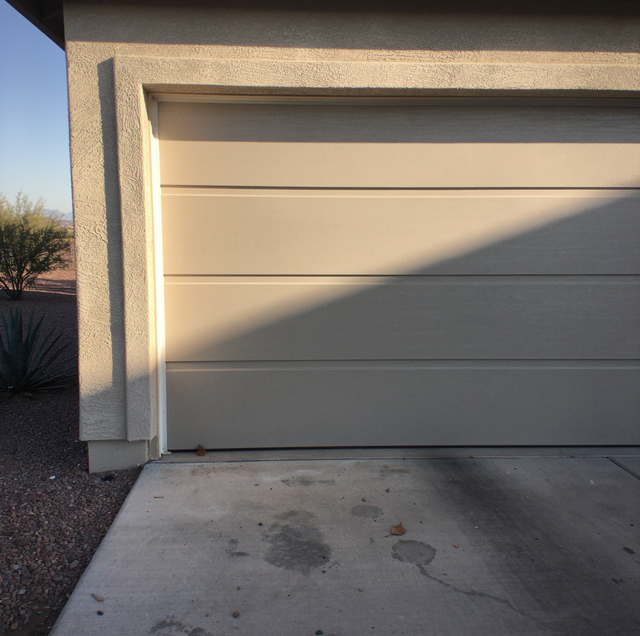
Two garage door styles can land on the same quote for the same opening, and on paper they look like one door twice. A flush-panel steel door and a carriage-house style door are both steel, and both are commonly sold in single-layer, double-layer, and triple-layer builds. Underneath those labels, the layer counts match, so a side-by-side comparison in front of you stalls early. The real separation is narrower than it first appears, and it runs through the face of the door, the glass built into it, and the thickness of the insulation you can order behind your panels.
The Same Three Steel Constructions Sit Under Both Styles
Both styles are typically built on the same three-step ladder. A single-layer door is one skin of heavy-duty exterior steel with nothing behind it. A double-layer door adds polystyrene thermal insulation with a vinyl backing, which makes that tier quieter in operation and more energy efficient.
The triple-layer build closes the section with a second steel skin behind the insulation, offering two energy-efficiency options and extra-quiet operation across most product lines. The interior skin closes the back of each section, and a section closed on both faces holds its shape better under the load your opener applies.
Stamped Steel Panels Against Composite Carriage House Overlay Trim
A flush-panel door's face is formed in the panel itself. The pattern is pressed directly into the same steel skin that carries the load, so nothing sits on the outside of the door and nothing on the face can work loose. Because every design needs its own tooling, flush-panel lines tend to keep their design count small.
A carriage-house style door works the other way. Its look comes from a separate composite overlay trim fastened to the steel face rather than pressed into it, typically built from a rot- and decay-resistant composite of reclaimed wood fiber and polymer. Because an overlay pattern does not require new tooling the way a stamped design does, carriage-house lines tend to offer a wider range of looks.
What that separate overlay buys you is a joint line a stamped panel does not have, built from a material chosen to survive it. The composite is there to keep the overlay from behaving like the real wood carriage doors the look is modeled on.
The Insulation Choice Can Differ by a Thickness Tier
Both styles are commonly offered with polystyrene insulation, each with its own R-value range. Flush-panel lines more often include a thinner insulation option on the ladder alongside the standard one, while carriage-house lines, because of the added overlay mass, more often start their insulated tier one step up. That does not make either style's published range stronger; it reflects which thicknesses each style is built to carry, and a thinner available tier is a way to under-specify a door, not a flaw in the door itself.
Manufacturers rarely print a per-model R-value in the page text; the figure that belongs to a specific model usually sits in a specification table or image, so it is a number worth asking for by model on your quote.
An R-value on a product page is the maker's published figure for the assembly, not a measurement of your garage, and it does not cover the air path around the perimeter where the door meets your opening. Where the number earns its place is in ranking two builds within the same style category against each other, and that ranking is the comparison in front of you.
Which Window Build Belongs on Each Style?
A flush-panel door typically treats glazing as a catalog of window inserts and trim options, which is a set of parts a homeowner assembles into a look after the fact. The flat-top section serves as a carrier for whichever insert-and-trim combination you choose, and the same stamped panel underneath will accept any of them without changing the door below the glass.
A carriage-house door typically builds the window into the door itself. Its window designs are built directly into the top section, with a decorative grille sized to match the thickness of the overlay trim on the face, so the section is manufactured around the opening rather than receiving an insert afterward. The matching dimension is the point of the carriage look, and it is also the constraint: a carriage-house top section usually offers fewer combinations because the window is part of the design itself, while a flush-panel top section offers more, on a face that stays flat between openings.
What a Composite Overlay Adds to the Weight of a Door
A flush stamped panel adds nothing to the outside of the steel skin. A carriage-house panel carries composite trim across the face of every section, and that trim is real added mass hung on the same opening, in the same tracks, moved by the same opener motor. Two doors of identical width and layer count do not weigh the same once one of them has an overlay across the entire face of every section.
That extra weight is why carriage-house installations rely more heavily on getting the hardware right. Proper torsion spring selection and heavy-duty hardware balance the added weight of an overlay door, and accurate spring calibration keeps operation smooth afterward. Your installer rates and calibrates that counterbalance to the finished door's actual weight during the install, and your part of it ends at telling them which style and which construction is on the order.
Reading a Specification Table That Is Often Published Only as an Image
Manufacturers commonly publish the full specification block for a product line as a single image rather than as page text: panel designs, insulation, R-value, door thickness, steel gauge, glass options, wind load and warranty terms. Because none of those figures is typically printed in the page text itself, they are worth having written onto your quote by model number rather than assumed from the style alone.
Warranty terms, steel gauge, exact door thickness and wind-load rating all vary by manufacturer and model even within the same style category, so a flush-panel door and a carriage-house door should each be confirmed on your specific quote rather than compared by style name alone.
Frequently Asked Questions
Manufacturers commonly attach quiet operation to the double-layer build, and extra-quiet operation to the triple-layer build in both styles, so the style name alone does not change the answer. Your roller type, the drive on your opener, and the condition of your track carry more noise than the panel style does.
Carriage-house lines commonly offer decorative hardware, such as strap hinges and pull handles, as an option, while flush-panel lines more often offer no hardware at all. If you want that look on a flush-panel door, you are typically sourcing it separately. Name it on your order.
Flush-panel lines commonly offer a wider factory paint color menu than carriage-house lines, since a carriage-house door's face carries overlay trim rather than a broad painted panel choice, and any color options on that side often apply mainly to the window grilles rather than to the door itself. If your door must match stucco or trim you already have, start with the flush-panel color list.
Yes, both styles are commonly offered with several glass options, including clear, obscure, tinted and insulated glass, letting you choose how much visible light comes through. Flush-panel lines tend to offer the wider glass menu of the two, since their insert-based window system accepts more combinations; a carriage-house door's built-in window openings are usually a shorter list.
Each style suits a somewhat different look, though the lists overlap. A flush-panel door tends to suit traditional styling, attached garages wanting quiet operation, and owners who want durable steel with custom design options. A carriage-house door tends to suit classic curb appeal without real wood, low-maintenance owners, and design-focused renovations. Both work on an attached garage; they part ways on whether you want the door's face to do architectural work for your house.
Both styles are commonly built from heavy-gauge steel finished with a multi-layer factory paint system for long-lasting durability, and both are commonly available with a wind-load reinforcement option built to withstand a specified wind pressure. Those two points are not differentiators between the styles; they are the floor both stand on. Finish durability drops out of the comparison entirely, and wind-load reinforcement becomes a question about your specific opening for a local installer to confirm.
A side-by-side look at a stamped flush-panel door and a carriage-house overlay door, with your opening measured and both builds in hand — one visit covers construction, overlay or stamped face, window build, and the counterbalance the finished door weight will require. Phoenician Garage Door & Repair serves Phoenix and the Valley. ROC #316471. Call (602) 610-0112.
