
Single-Layer vs. Insulated Garage Doors: Which Fits a Hot Climate?
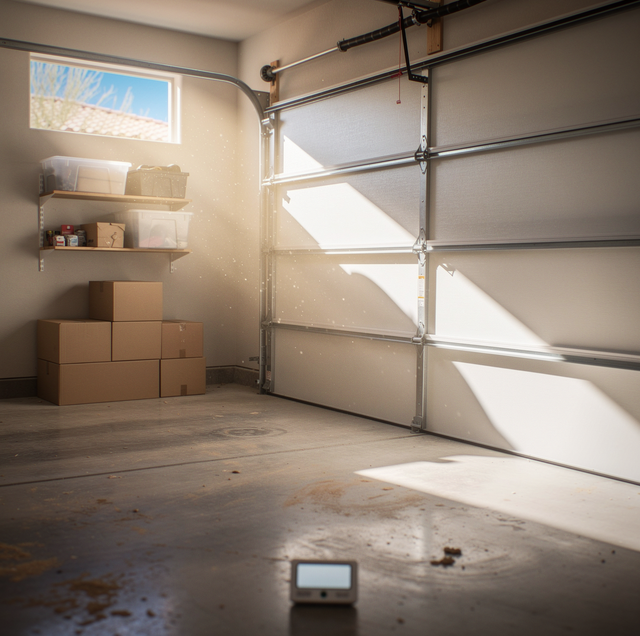
Put your palm flat against a closed garage door on a bright afternoon, and you get an immediate answer to a question most homeowners never think to ask: how much of that outside heat is actually making it in. A single sheet of painted steel runs hot enough to sting, and the air just behind it isn't far behind. An insulated door with a foam core sandwiched between steel skins tells a different story: the outer face still bakes in the sun, but the inside surface and the air near it stay noticeably cooler. That gap is the whole argument for choosing one door type over the other in a climate that runs hot most of the year, and it's worth understanding the mechanism before weighing the tradeoffs in weight, noise, and upfront cost that come with it.
What Separates a Single-Layer Door From an Insulated One
A single-layer door is one skin of steel or aluminum, formed into panels, with nothing behind it but the ribs stamped into the metal for rigidity. Heat, cold, and sound pass through that skin with almost nothing to slow them down.
An insulated door adds a foam core behind the outer steel skin. A 2-layer door pairs a steel face with a foam backing, leaving the foam exposed on the inside of the garage. A 3-layer door encloses that foam completely between two steel skins, so the interior looks and feels like finished steel rather than exposed foam. The foam is usually polystyrene or polyurethane, and its job is to slow the rate at which heat moves through the door, just as insulation in a wall slows heat from moving into a house.
Neither construction stops heat from reaching the door's outer face. The sun still hits the steel, and that steel still gets hot. What changes is how much of that heat makes it through to the garage side, and how fast.
How the Foam Core Changes What the Garage Feels Like
A garage without insulation in the door acts like a box with one uninsulated wall facing the sun for hours at a stretch. The steel skin heats up, and with no barrier behind it, that heat radiates into the garage air almost as fast as it builds outside. By late afternoon, an uninsulated garage can feel nearly as hot as standing outside in direct sun, even with the door closed the entire time.
A foam core changes that math. It doesn't block heat outright, but it slows heat transfer enough that the garage side of the door and the air near it stay measurably cooler throughout the hottest stretch of the day. For a garage sharing a wall with living space, that difference matters beyond the garage itself: less heat radiating through the shared wall means the air conditioning on the other side has less work to do. The same slowdown protects anything heat-sensitive stored in the garage, including an opener's own circuit board, since consistently high heat shortens the lifespan of small electronic components.
Single-Layer vs Insulated Garage Doors at a Glance
| Factor | Single-Layer (Non-Insulated) | Insulated (2-Layer / 3-Layer) |
|---|---|---|
| Heat transfer/garage temperature | Little resistance to heat transfer; garage air tracks close to outdoor temperature by mid-afternoon | Foam core slows heat transfer; garage stays noticeably cooler through the hottest hours |
| Durability/dent resistance | Thin steel flexes and dents easily from impact; more prone to visible warping and waviness in sustained heat | Foam-backed construction stiffens the panel, resisting dents and holding a flatter profile under heat |
| Noise dampening | Steel skin resonates; wind, rain, and door movement carry through as a drumming sound | Foam core absorbs vibration, noticeably quieting wind noise and the sound of the door in motion |
| Weight/opener strain | Lighter door; less mass for the spring system and opener to manage | Heavier door; springs and opener must be sized and tensioned to match the added weight |
| Upfront investment framing | Lower upfront cost; simpler construction | Higher upfront cost, reflecting the added materials and multi-layer build |
Durability and Dent Resistance in Daily Use
A single sheet of steel has nothing behind it to spread out the force of an impact, so a bike, a basketball, or a bumped ladder tends to leave a visible dent right where it made contact. That same lack of backing shows up in a subtler way over time: sustained heat causes bare steel panels to expand and contract with reduced structural support, and thinner-gauge single-layer panels are more prone to a rippled, wavy look known as oil-canning, especially on wider panels that face direct sun for years.
An insulated panel behaves differently under the same conditions. The foam core bonds to both steel skins on a 3-layer door, or to the single skin on a 2-layer door, and that bond stiffens the whole panel, spreading impact force across a wider area instead of concentrating it at one point. The bonded foam also resists the expansion-and-contraction waviness that appears on unsupported single-layer steel, so an insulated door tends to maintain a flatter, straighter appearance through repeated heat cycles.
Noise, Weight, and How Hard the Opener Works
Sound moves through a single steel skin almost unobstructed, which is why an uninsulated door tends to turn wind gusts, rain, and its own hardware into a drumming sound that carries into the garage and sometimes into an attached room. A foam core interrupts that path, absorbing vibration rather than transmitting it, so an insulated door runs noticeably quieter in wind and during normal opening and closing.
Weight is the real tradeoff. A 2-layer or 3-layer door with steel skins and a foam core weighs more than a single sheet of steel formed into the same panel shape. That added weight has to be offset somewhere, and the spring system is where it happens: torsion or extension springs are sized to counterbalance a door's weight, so the opener handles only a small share of the lifting work, not the full weight of the panel on every cycle.
Installation quality matters more than door choice on this point. A heavier insulated door with springs correctly tensioned to match its weight puts no more day-to-day strain on the opener than a lighter single-layer door with properly matched springs. The strain shows up when a heavier door is installed without adjusting the spring tension to compensate, forcing the opener's motor and drive components to make up the difference on every cycle. In a climate where high daily cycle counts already wear opener parts down faster than milder use, an opener fighting an unbalanced door reaches the end of its working life sooner.
Where the Difference Matters Most
The temperature gap between single-layer and insulated doors matters most in three situations: an attached garage that shares a wall with living space, a garage used for anything beyond parking, and a door that faces direct sun for much of the day. Sun exposure also ties back to the seals around the door. Intense UV breaks down rubber weather seals and bottom gaskets over time regardless of door type, but a hotter garage interior on an uninsulated door adds heat stress to those seals from both sides, which can shorten how long a seal holds its shape before it starts letting dust and heat through the gap.
Weighing the Investment Without a Price Tag
An insulated door represents a larger upfront investment than a single-layer door of the same size, largely because of the added steel and foam and the more involved manufacturing required for a bonded, multi-layer panel. A single-layer door costs less to buy and install upfront, making it a reasonable choice for a garage that's rarely used for anything beyond parking and quick trips in and out.
Where the calculation shifts is in what that upfront difference buys over the life of the door: a cooler garage, quieter operation, and a panel that resists warping and denting through years of heat cycling. Framed as an investment rather than a straight cost comparison, an insulated door tends to justify its higher price for anyone who uses the garage for more than storage, while a single-layer door remains a sound, budget-friendly option for a garage that stays simple.
Making the Call for Your Garage
A few practical questions narrow the decision quickly. Does the garage share a wall with a bedroom, office, or living space? Is the door on the sun-facing side of the house for most of the day? Is the garage used for anything beyond parking, whether that's a workbench, storage of heat-sensitive items, or time spent in the space? A "yes" to any of these tends to tip the case toward an insulated door.
A detached garage used purely for parking and storage, with limited daily sun exposure and no shared wall with living space, is a reasonable place for a single-layer door to do the job without paying for insulation that space won't benefit from as much. Either way, have a technician confirm that the spring system and opener are sized correctly for the door you choose, since a mismatch between door weight and spring tension can turn a good door choice into a maintenance headache down the road.
Frequently Asked Questions
The temperature difference is real and comes from slowed heat transfer through the foam core, not from blocking heat outright. How much cooler the garage runs depends on the door's specific construction, the number of layers, and the foam's thickness, so treat any specific number a manufacturer advertises as a claim tied to that product's testing conditions rather than a guarantee for every install.
Yes, aftermarket foam board or reflective insulation kits are available for retrofitting a single-layer door. They can reduce some heat transfer, but they don't bond to the steel the way a factory-built sandwich panel does, so they add little of the structural stiffness that helps a factory-insulated door resist dents and warping. They also add some weight, which is worth checking against the existing spring tension before installing a full kit across every panel.
It does, mainly in what's exposed on the garage side. A 2-layer door leaves the foam backing visible on the interior face, where it can be scuffed, scratched, or dented by items stored against the door or by bumps during normal use. A 3-layer door fully encloses that foam between two steel skins, so the interior looks and holds up like finished steel, at the cost of a heavier, more expensive panel than a comparable 2-layer door.
Not on its own, as long as the spring system is re-tensioned to match the door's new weight upon installation. The springs, not the opener, carry most of a door's weight; the opener's motor only handles a small remaining share. Trouble shows up specifically when a heavier door goes in without that spring adjustment, since the opener then ends up doing lifting work it wasn't built for on every single cycle.
The bottom seal and side weatherstripping matter for both door types, but an insulated door's thicker panel sometimes calls for a different seal profile at the jambs to keep full contact along the perimeter. Whatever the door type, UV exposure degrades rubber seals over time, so the seal condition is worth checking on its own schedule rather than assuming a newer insulated door needs less attention there.
Generally, yes, though the difference is gradual rather than dramatic. A single-layer steel panel flexes more with heat cycling because it lacks a foam backing to stabilize it, and that repeated flexing can eventually appear as fine cracking or dulling in the painted finish, particularly on darker colors that absorb more heat. An insulated panel's stiffer, foam-backed construction resists that flex, which tends to help the finish hold its look longer under the same sun exposure, though fading from UV exposure still affects both door types over enough years.
Compare single-layer and insulated door options for your garage — a technician can size the right door and spring system for your space. Phoenician Garage Door & Repair serves Phoenix and the Valley. ROC #316471. Call (602) 610-0112.
