
Why Your Garage Door Opens a Few Inches, Then Reverses
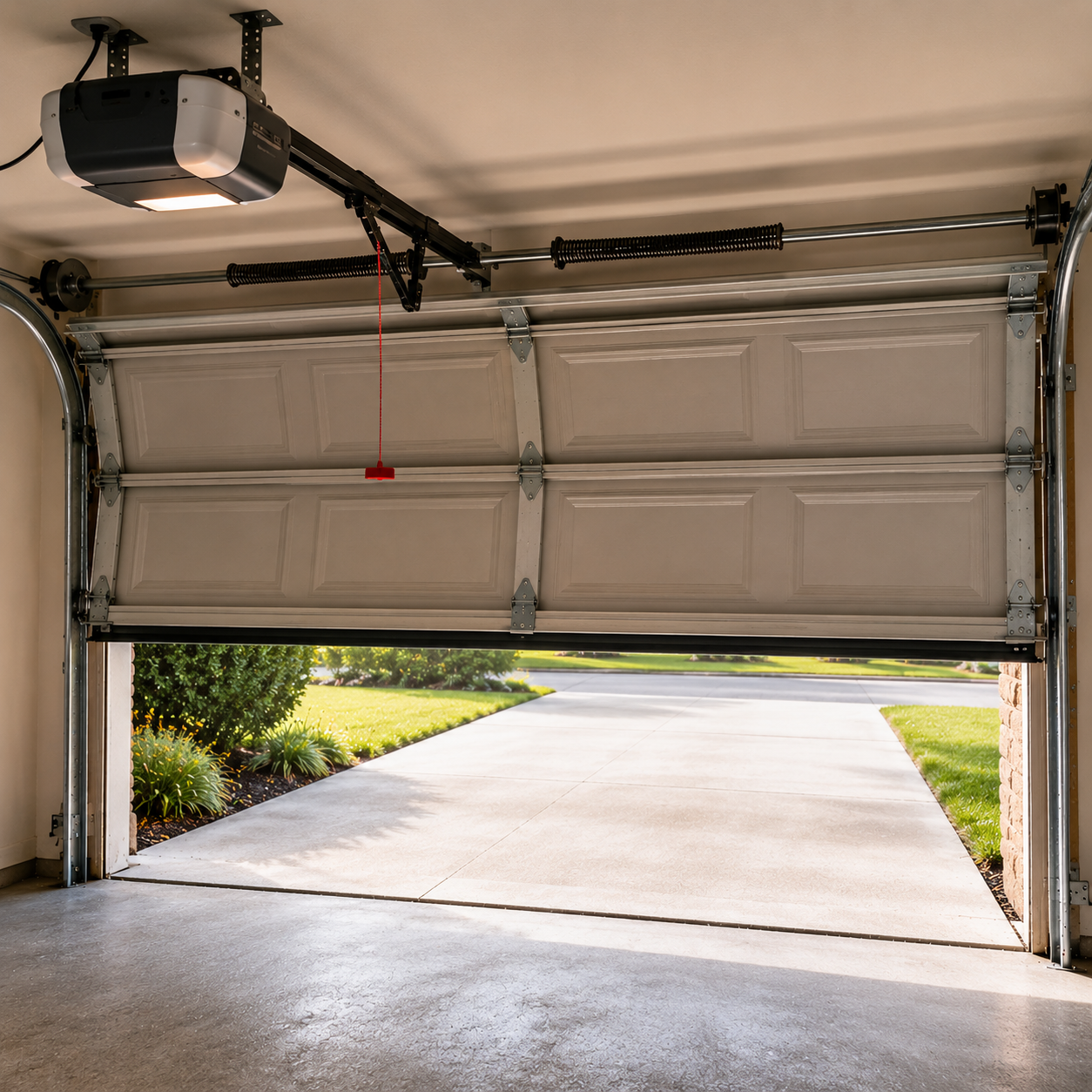
Quick Answer: When a door rises a few inches and then stops or reverses on the way up, the opener is sensing more resistance than it expects — usually a binding door (a weak or broken spring, dry rollers, a bent track) or a force or travel setting that's off. It's not the safety photo-eyes; those only govern the closing direction. The fastest way to tell a door problem from an opener problem is to disconnect the opener and lift the door by hand.
You push the button, the garage door lurches up a few inches, hesitates, and rolls right back down. Do it again, and you get the same stubborn result. It's easy to assume the opener is dying, but most of the time the opener is doing exactly what it's designed to do — it's hit resistance it didn't expect and stopped to protect itself and the door. The trick is figuring out what it's pushing against.
What's Actually Happening
A garage door opener is built to move a door that's already balanced and easy to lift — the springs do the heavy lifting, and the opener just guides it. To stay safe, the opener constantly senses how much force the door is taking. When it encounters more resistance than its settings allow, it assumes something is wrong and stops or reverses rather than forcing through.
One important distinction clears up a lot of confusion: this is the opening direction. The safety photo-eyes near the floor — the ones people usually blame — only control the closing direction; they stop a door from crushing something underneath it. A door that won't complete its travel upward isn't a photo-eye problem. It's the opener reacting to resistance or to a setting, which points you at two very different causes.
First, the One Test That Settles It
Before anything else, find out whether the problem is the door or the opener. Pull the red emergency-release cord to disconnect the door from the opener, then lift the door by hand about halfway and let go.
A properly balanced door lifts smoothly with one hand and holds roughly in place. If it feels heavy, sticks partway, slams down, or fights you, the problem is the door itself — almost always the springs or the hardware — and the opener was simply refusing to drag a door that's become too heavy. If the door glides up and down easily by hand, the door is fine, and the issue is in the opener or its settings. This 30-second test tells you which path you're on.
When It's the Door (Binding or a Spring)
If the door is hard to lift by hand, it's binding, and the opener is right to quit. The most serious cause is a weak or broken spring: springs counterbalance the door's weight, and when one fails, the door becomes far too heavy for the opener to lift, so it rises a little and gives up. Other binding causes are mechanical — worn or dry rollers, a bent or misaligned track, or debris in the track — all of which add drag the opener reads as an obstruction.
| What you find | Likely cause | What to do |
|---|---|---|
| Door heavy or stuck when lifted by hand | Weak or broken spring | Call a pro — spring work is dangerous |
| Door catches at one spot in the track | Bent track, worn roller, debris | Clear debris; pro for track/rollers |
| Squeals and drags but moves | Dry rollers and hinges | Lubricate with white lithium grease |
| Door fine by hand, opener still stops short | Force or travel setting | Have the opener recalibrated |
A safety note that isn't optional: garage door springs and cables are under extreme tension, and adjusting or replacing them is seriously dangerous. That part is a job for a trained technician, not a weekend fix.
When It's the Opener (Force and Limit Settings)
If the door moves freely by hand but the opener still stops short, the problem is usually in the opener's settings. Openers have adjustable force settings — how much resistance the door is "allowed" to offer before the opener decides something's wrong — and travel limits that specify how far the door should move. If the force is set too low, the opener misreads normal movement as an obstruction and reverses; if the travel limits are off, it stops before the door is fully open. These need to be recalibrated correctly, which is best done by a technician, especially after any spring or balance work changes how the door moves.
There's also the heat factor here in the Valley. An opener motor that overheats on a brutal afternoon can cut out mid-cycle and need 15 to 30 minutes to cool before it works again. And a door that's already marginal — a tired spring, a track that's a hair out of line — has even less room for error when summer heat adds stress to the system. None of that changes the diagnosis; it just means heat can be the straw that tips a borderline door into stopping.
What to Try, and What to Leave Alone
You can safely do a few things yourself: clear any debris from the tracks, make sure nothing is physically blocking the door, and lubricate the rollers, hinges, and springs with white lithium grease, which cures a surprising number of "sticking" doors. What you should not do is adjust the springs or cables, or start changing force and limit settings blindly — get those wrong, and you either defeat a safety feature or hurt yourself. If lubrication and a clear track don't fix it, or the door failed the hand-lift test, that's the line where it becomes a professional repair.
Frequently Asked Questions
The opener is sensing more resistance than it expects on the way up and aborting to protect itself and the door. That's usually a binding door — a weak or broken spring, dry rollers, or a bent track, or a force setting that's too sensitive. It's not the safety sensors near the floor, which only affect the closing direction.
No. The photo-eyes only govern closing — they stop the door from coming down on something. A door that won't finish opening is reacting to resistance or to its force and travel settings, not the safety beam. So if your door fails on the way up, don't waste time on the sensors; check the door's balance and the opener's force settings.
Pull the red release cord and lift the door by hand. If it's heavy, sticks, or slams, the door is the problem — likely the springs — and the opener was refusing to lift it. If it glides easily by hand, the door is fine, and the issue is in the opener or its force and travel settings. That one test points you straight at the cause.
You can safely clear the tracks, remove anything blocking the door, and lubricate the rollers and hinges with white lithium grease, which often fixes sticking doors. You should not adjust springs, cables, or force settings yourself; springs are under extreme tension, and force calibration affects safety. If the basics don't fix it, call a technician.
Two reasons. An opener motor can overheat on a very hot day and shut down mid-cycle until it cools, usually for 15 to 30 minutes. And extreme heat adds stress to an already-marginal door — a tired spring or a slightly misaligned track has less margin — so heat can be the final push that makes a borderline door start stopping short.
Not necessarily — the auto-reverse is a built-in safety feature, and the door stopping when it senses resistance is that feature working. What it's telling you is that something is adding resistance or a setting is off. The problem isn't that the door reverses; it's whatever the door is reacting to, which the hand-lift test will help you find.
The Door Is Telling You Something — Listen to It
A garage door that climbs a few inches and quits isn't usually a dying opener; it's an opener refusing to fight resistance it was never built to overcome. Run the hand-lift test first, because it splits the problem cleanly: a heavy door means springs and hardware, an easy door means opener settings. Clear and lubricate what you safely can, and leave the springs and the calibration to a pro — that's the fast, safe path back to a door that opens in one smooth pull.
Garage door stalling or reversing on the way up? — Get the balance, springs, and opener settings checked and corrected safely. Phoenician Garage Door & Repair serves Phoenix and the Valley. ROC #316471. Call (602) 610-0112.
